For New Zealand tourism operators, TripAdvisor is not just another review platform. For many accommodation, activity, and tour businesses it remains the single most important channel for international visibility - more important than Google in the markets that send the most international visitors. Reviews on TripAdvisor are read by people deciding which country to visit, not just which business to book.
That weight cuts both ways. A strong TripAdvisor presence drives bookings from countries where Google's grip is weaker. A weak one excludes you from the consideration set of travellers who plan their trips through TripAdvisor first. This article walks through how the platform actually works for NZ operators, the specific things that move rankings, and how to handle the situations that come up most often.
Why TripAdvisor still matters for NZ tourism
Domestic visibility on TripAdvisor matters less than it used to. Local New Zealand customers checking a cafe or a hotel are now more likely to read Google reviews. International visibility is a different story. In key inbound markets - particularly North America, Western Europe, and parts of Asia - TripAdvisor remains the dominant trip planning platform. International travellers research countries on TripAdvisor, build itineraries on TripAdvisor, and book through TripAdvisor's partners.
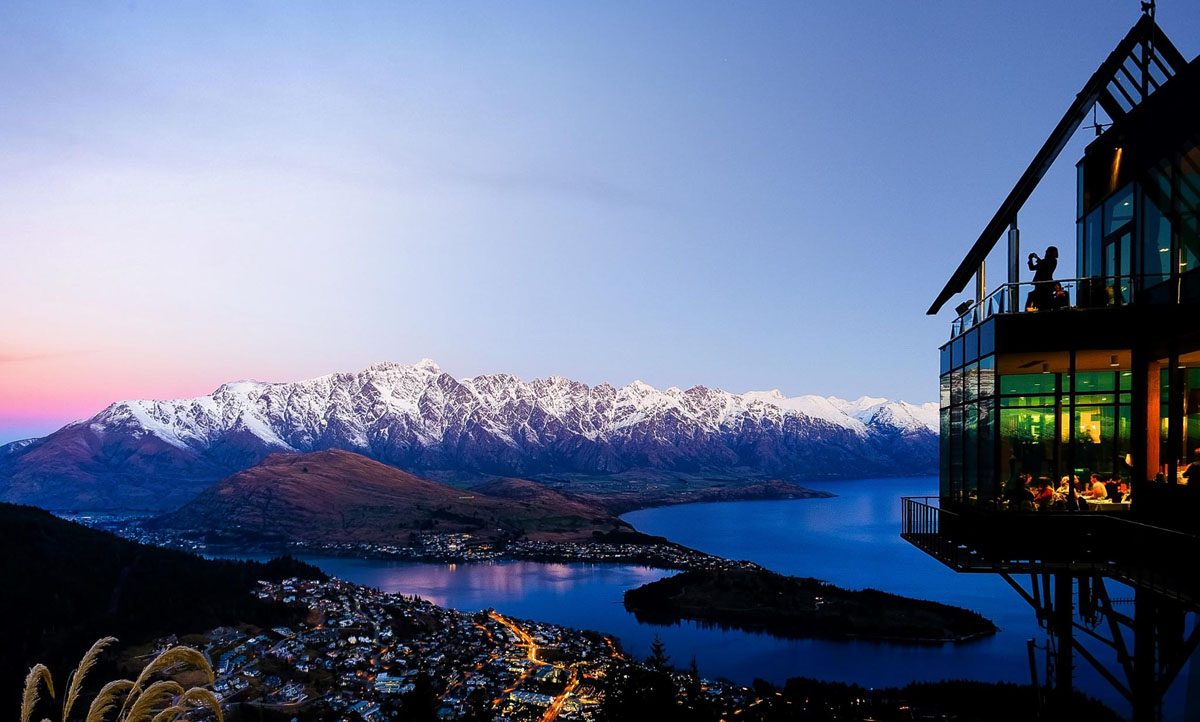
For an Auckland cafe targeting locals, this is barely relevant. For a Queenstown adventure operator, a Bay of Islands fishing charter, a West Coast accommodation provider, or any business that depends on international tourism, the TripAdvisor profile is core infrastructure. Treating it as an afterthought leaves real revenue on the table.
The thing tourism operators underestimate
An international traveller decides whether to visit New Zealand by reading TripAdvisor. They decide whether to spend three days in Queenstown by reading TripAdvisor. They decide which operator to book by reading TripAdvisor. By the time they reach your website, the decision has often already been made on a TripAdvisor page you may not have looked at in six months. The question is whether that page is making the case for you or quietly losing the booking.
How TripAdvisor ranks businesses
TripAdvisor uses what it calls the Popularity Index to rank businesses within a category and location. The index is influenced by three main factors: the quality of reviews (rating distribution), the recency of reviews, and the volume of reviews. A high rating with no recent reviews ranks below a slightly lower rating that has consistent recent activity. Volume matters but recency matters more than most operators realise.
That has practical implications. A tourism operator with 2,000 reviews and a 4.5 average can lose ranking to a competitor with 400 reviews and a 4.4 average if the competitor is getting 30 new reviews a month and the larger operator is getting 5. The platform rewards businesses that are continuously active, and punishes the ones that have been coasting on historical review volume.
What the Popularity Index actually weighs
- The overall star rating, weighted toward more recent reviews
- The recency of new reviews - the more recent, the more weight
- The volume of reviews relative to other businesses in the same category and location
- The completeness and accuracy of the business listing
- The presence and currency of photos uploaded by both the business and travellers
- Response rate to reviews, especially negative ones
- The proportion of reviews that mention specific positive elements (food, service, location, value)
Claiming and optimising the listing
Most NZ tourism operators have a TripAdvisor listing whether they created one or not. Travellers create them. The first step is claiming the listing through the Management Centre - which requires verifying you represent the business, usually via a code sent to a verified business contact.
Once claimed, the listing becomes editable. Update the business name, category, address, phone number, website, opening hours, price range, and amenities. Add a description in plain English that mentions what makes the experience distinctive. Upload your own photos - 20 to 50 high-quality images covering the experience, the location, the food or activity, and the team.
Get the basics right before anything else
An incomplete TripAdvisor listing actively harms ranking. The platform interprets missing information as evidence that the business is not engaged. If your hours are blank, your photos are user-submitted only, and your description is empty, you are competing at a permanent disadvantage against operators who took an hour to fill in the form. This is the lowest-effort, highest-impact intervention available, and most operators have not done it.
The Management Centre and what it gives you
The Management Centre is TripAdvisor's free dashboard for claimed listings. It provides traveller analytics, the ability to respond to reviews, photo management, special offer publishing, and access to the review challenge process. None of this is available unless the listing is claimed.
The traveller analytics show where your visitors are coming from - both geographically and through which TripAdvisor pages. This is more useful than it sounds. If 60 percent of your TripAdvisor visitors are arriving from a "Things to do in Queenstown" list, you know that list matters. If they are arriving from Google searches that hit your TripAdvisor page, you know your TripAdvisor page is functioning as a landing page in its own right.
Responding to reviews
Response rate is a direct ranking factor. Operators who respond to most or all reviews rank higher than operators who respond to none. The response itself is also seen by every future traveller reading the page - which makes response one of the highest-leverage activities on the platform.
The principles for responding are the same as for Google or Trustpilot - the response is for the next reader, not the reviewer; keep it short; do not contradict facts; do not name staff; offer to continue offline. The platform is different but the audience dynamics are identical.
One TripAdvisor-specific note: international travellers often write reviews in their second language, and their phrasing can read as harsher than they intended. Resist the urge to take offence at clumsy English in a negative review. Respond as if the reviewer was a polite, well-meaning customer who had a bad day - because most of the time, they were.
An international traveller decides whether to visit New Zealand by reading TripAdvisor. By the time they reach your website, the decision has often already been made.
Challenging a review
TripAdvisor has its own challenge process, accessed through the Management Centre. The grounds for removal are similar to Google and Trustpilot - reviews must be based on a genuine first-hand experience, must not contain personal attacks, must not promote competitors, must not be off-topic.
How to challenge a TripAdvisor review
-
1
Log into the Management Centre and locate the review. Click "Report a review" beneath it.
-
2
Select the violation type. The most common successful categories are "Not first-hand experience," "Personal attack," and "Inappropriate content."
-
3
In the explanation field, describe the violation in factual terms. Reference specific words or claims from the review that demonstrate the breach. Keep it short - three to five sentences.
-
4
Submit the report. TripAdvisor reviews challenges within 5-10 business days. You will be notified of the outcome by email.
-
5
If the review is not removed and you have additional evidence, you can resubmit through the Management Centre with a clearer case. If multiple suspicious reviews appear in a short window, contact TripAdvisor support directly to flag a potential coordinated attack.
Building review velocity
The single most important thing a tourism operator can do for TripAdvisor performance is keep new reviews coming in. Volume matters but recency matters more. The operators who dominate the Popularity Index in their category are not the ones with the most historical reviews - they are the ones with the most recent reviews.
The mechanics are straightforward. Hand every guest a small card or QR code at the end of their experience that links directly to your TripAdvisor review form. Send a follow-up email the day after their booking thanking them and including the same link. Make the request specific, brief, and easy to act on. Most international travellers who had a good time will leave a review if asked at the right moment - which is usually within 24 hours of the experience while it is still fresh and they are still in holiday mode.
Sound familiar?
Greg runs a small group walking tour business in the Bay of Islands. His TripAdvisor profile had 340 reviews and a 4.7 average from years of solid operation. He had not actively requested reviews in over a year and was averaging about 2 new reviews a month from spontaneous traveller posts. His ranking on the local "Things to do" list had quietly slid from third to ninth.
He printed small cards with a QR code linking directly to his TripAdvisor review page, handed them out at the end of every tour with a brief verbal request ("If you enjoyed today, a quick review would help us a lot"), and added a follow-up email to his booking system. Within four months his review velocity had increased to 15 new reviews per month and his ranking was back to fourth.
The reviews were from real customers describing real experiences - the same customers who had always taken his tours. The only thing that changed was that he asked them.
Special situations: coordinated attacks and review bombs
Tourism operators occasionally face coordinated negative review campaigns - sometimes from disgruntled former employees, sometimes from a single customer organising a grievance, sometimes from competitors. TripAdvisor takes these seriously when they are clearly identified, but the process for getting action is different from a single review challenge.
If you suspect a coordinated attack, document the pattern - the timing, the language similarities, the reviewer profiles - and contact TripAdvisor support directly through the Management Centre help section. Frame it as a request for fraud investigation, not a routine review challenge. Genuine coordinated attacks are usually identifiable to TripAdvisor's fraud team, who can take more sweeping action than the standard challenge process allows.
When to get specialist help
Most TripAdvisor management can be handled in-house if you have the time and the discipline. The cases that benefit from specialist help are operators competing in saturated tourism markets where every position on the Popularity Index matters, businesses recovering from a serious incident or coordinated negative campaign, and operators whose listings have historical issues that need to be cleaned up before optimisation will work.
Specialist help is also worth it when the in-house effort has plateaued - when reviews keep coming but rankings are not moving. That is usually because something specific is wrong with the listing or the response strategy, and an experienced second look can identify the issue faster than guesswork.
If you are an NZ tourism operator with a TripAdvisor situation that is not resolving on its own, the first step is the same: tell us what is happening. The first conversation costs nothing and we will tell you honestly what would change first.